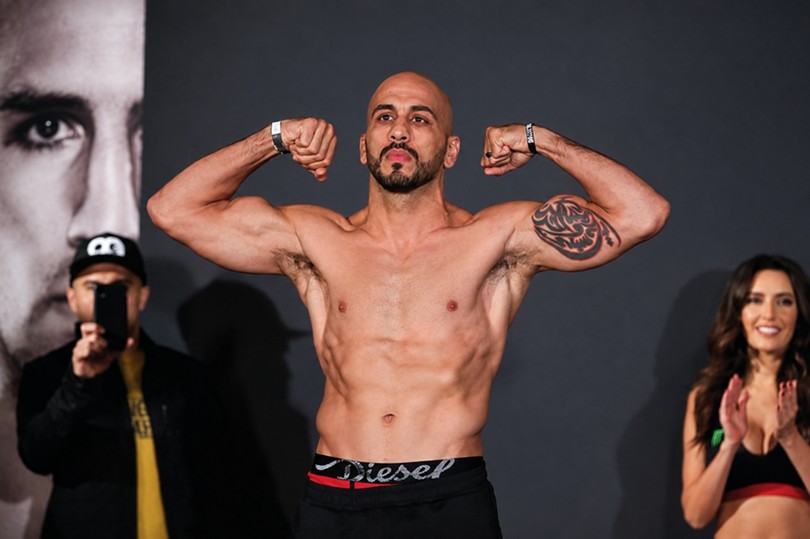
It was a good night for Todd Stoute, but the feel-good part of that evening only lasted so long.
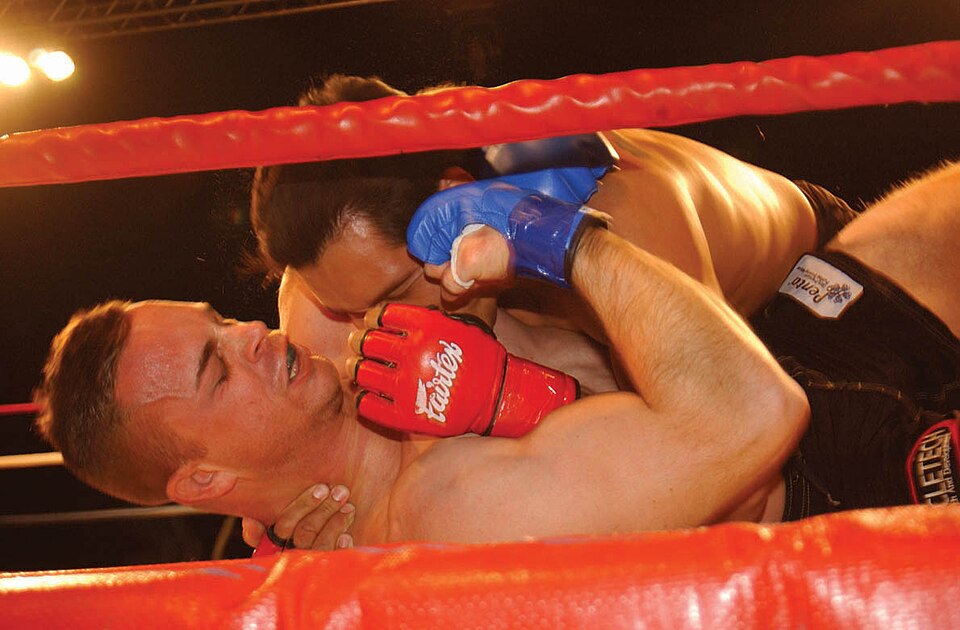
After dropping a split decision loss to Marc-Andre Barriault at TKO 40, snapping his four-fight winning streak in the process, Stoute, 36, rebounded nicely with a third round submission victory over now-UFC fighter Alan Baudot at TKO 47 on April 11, 2019.
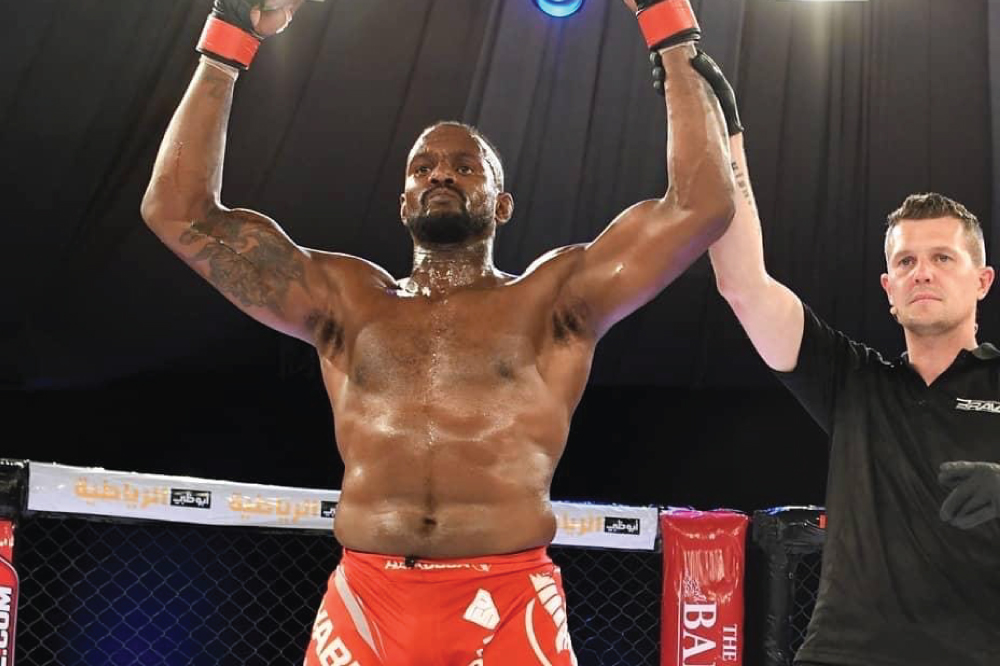
“I pinned him against the fence, used a lot of Roman-Greco, and just beat him up. The fight speaks for itself,” said Stoute in an interview with MMA Empire.
“After the second round, my coach asked me if I wanted to win this fight. I said yes, and he said okay, finish it right now. I ended up getting on top of him again, got his back, beat the s**t out of him while riding his back, then punched him into a submission. It was one of my most technical fights.”
A few weeks after the fight, Stoute said he received a call from the Quebec commission informing him a small amount, 100 nanograms, of THC had been detected in his system. THC is one of the main components in cannabis (marijuana).
As of Oct. 17, 2018, cannabis is legal to use throughout Canada, which is where Stoute’s fight with Baudot was contested.
“I smoke weed, but not when I have a fight coming up. I have ten years of MMA experience without ever using any sort of illegal substance. I asked them how much weed I had in my system, and they said 100 nanograms. At this time, the UFC and USADA themselves were only testing for the threshold above 150 nanograms. They weren’t even bothering testing for below 150,” said Stoute.
“I told them, straight up, I never smoked anything. The only thing I had was a CBD oil, which I didn’t know had THC in it, to relax after cutting weight. It didn’t help me with a three-round fight, and it didn’t help me with my technical work. It was 100 nanograms, and 100 nanograms, from what I’ve been told, is not very much.”
On the initial phone call, Stoute said the commission told him the standard penalty for an offence of this nature is a six-month suspension.
“I said this isn’t an offence. I didn’t purposely dope, and I don’t dope. I’ve been doing this for over 10 years. This is not steroids, this is marijuana. I understand that there’s rules, but this not what I would consider to be serious,” said Stoute.
Change of terms
Stoute said the commission told him since it was a first time offence, they would reduce the suspension down to four months, in addition to him paying back his $3,000 fight purse.
Two days later, Stoute received the phone call for his official hearing with the commission to confirm the details surrounding his penalty, which turned out to be different than what he was originally told.
“They said ‘we are taking your $3,000 pursue, you have a four-month suspension, and we’re turning your fight into a loss and giving the win to Alan Baudot.’ I said that wasn’t part of the agreement and that wasn’t what I was told two days ago. I said how can you turn my fight, my finish, into a loss for 100 nanograms of weed, instead of a no-contest? If you’re going to turn anything over, it should be a no-contest. He didn’t win anything; he got choked out and outclassed in every round,” said Stoute.
“They said this was normal for these kinds of things, and I said no, it’s not. You’re not talking to a guy who’s been doing this for only two or three years. I know how this process works. If it’s a decision, a split decision, then there could be grounds to turn it over. But a finish? You don’t turn over a finish to a loss for some weed, especially 100 nanograms. That doesn’t make any sense, that’s extremely excessive.”
Although he didn’t agree with being punished in any fashion, Stoute said he could accept the originally-presented suspension and paying his fight purse back.
He said the greatest issue he had with the entire ordeal was the win being taken off his record and turned into a loss.
“It’s not the suspension that pissed me off. Even the $3,000, if you want that back, I’ll give it back no problem. But then you’re going to take the win away too? That’s excessive for something that’s not even illegal, something that can’t even get you arrested anymore,” said Stoute.
No way out
Stoute said he expressed his displeasure with the overall punishment and said he wouldn’t agree to it or comply with it. The commission told him if he failed to comply and accept the terms being offered, the suspension would be extended.
“They told me if I wanted my suspension to only be four months and not longer, then I won’t make too much of a stink about it. They were basically threatening my MMA career,” said Stoute.
“At this time, I wasn’t signed to Brave or anywhere else. I was thinking how am I ever going to fight again if I come at these guys? I said so you’re basically pigeonholing me into this s**t, and telling me I’m not going to have my way of eating or living if I don’t abide by these rules.”
In the end, Stoute said he accepted the terms of the penalty and served his four-month suspension before accepting a short-notice fight with Brave CF in November.
Following that fight, Stoute said he discovered his suspension had been lengthened once the Quebec commission found out he had fought internationally, despite the fight being after the initial four-month suspension.
As a result, Stoute said his suspension for competing in Canada remains indefinite, and said he’s unsure when or if he’ll be able to fight in Canada again.
“They were basically saying I didn’t follow the suspension, even though it was up in November,” said Stoute.
“I wasn’t fighting in Toronto, or Canada, or even North America. I was fighting in India. They said I didn’t ‘recognize the suspension,’ and have basically banned me. I’m now fighting around the world representing a country that doesn’t even let me fight here. It’s crazy.”