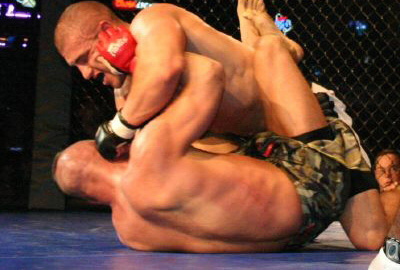
Marlan Hall (9-3) will defend his BFL amateur featherweight title against Casey O’Leary (4-3) at BFL 60 Saturday night in Coquitlam, B.C.
Coquitlam's Hard Rock Casino had long been BFL's home base — the venue where most of the promotion's title pictures took shape — and an amateur featherweight championship bout fit the promotion's pattern of giving its amateur belts real main-card placement.
BFL's amateur titles had genuine market value in the B.C. scene — the promotion's belts were the measuring stick for who was ready to turn pro, and a defense on a numbered card was worth more than an unbeaten streak built on lesser shows.
The Coquitlam venue also mattered — fighters who won belts at the Hard Rock tended to return to defend them there, which gave the building a kind of championship continuity rare in regional MMA.
Come fight night, the stakes were the same as they always are for a first defense — legitimization for the champion, life-changing opportunity for the challenger, and a division watching to see whether the belt's newest holder was built to keep it.
The matchup was a classic champion-versus-form case: Hall defending for the first time since claiming the vacant belt, Ouellet-style résumés aside, O'Leary arriving with momentum built on a 4-3 record that hid how well he had been fighting lately.
The featherweight matchup also fit BFL 60's broader profile — a card that mixed its most established amateur champions with challengers in form, and this bout was the division's clearest test of which kind of résumé mattered more.
Hall defeated Gwyn Berry to win the previously vacant title back at BFL 57, while O’Leary enters this contest having won three of his last four contests.
Hall's 9-3 amateur ledger was one of the busiest on the BFL roster — twelve fights is a full education at this level, and champions who reach double digits as amateurs rarely arrive at their belt by accident.
Hall's title win over Gwyn Berry at BFL 57 had capped that education — a victory over a credible opponent for a vacant belt is the standard way the promotion crowned its amateur champions, and it set the table for this first defense.
Berry himself was no easy out — a win over him carried legitimacy — and Hall's ability to solve that puzzle is part of what made him a convincing pick for the division going forward.
O'Leary's path ran the other direction — a .500 record propped up by a recent surge, the kind of challenger whose early losses taught him enough to become dangerous right when the title shot materialized.
The featherweight division has historically been BFL's deepest amateur weight class, and the winner of this bout would inherit a belt with real lineage behind it.
Names on the BFL amateur featherweight title lineage had gone on to pro careers across the west — the belt worked as a credential, not just hardware, which is why defenses like this one drew real attention beyond the immediate fanbase.
O'Leary's recent form — three wins in four — suggested a fighter who had found his level late rather than one hitting a wall, which is the most dangerous kind of .500 challenger there is.
Listen to the full interview with Hall and O’Leary below.
For Hall, the first defense is always the harder one — winning a vacant title announces you; keeping it confirms you. For O'Leary, the math was simpler: a win over a 12-fight champion is the single biggest amateur result available in the division.
Champions in Hall's position face a familiar trap — the first defense carries none of the excitement of the title win and all of the risk, against a challenger who has spent a full camp preparing for exactly your game.
Both men spoke about the bout in the interview below, touching on preparation, expectations, and what the belt means at this stage of an amateur career.